Host Formally Disputes Scores Awarded By Dinner Party Guests
A home cook has formally contested the marks awarded by fellow dinner-party guests, insisting a delayed menu and unset dessert were scored down out of personal resentment rather than culinary merit.
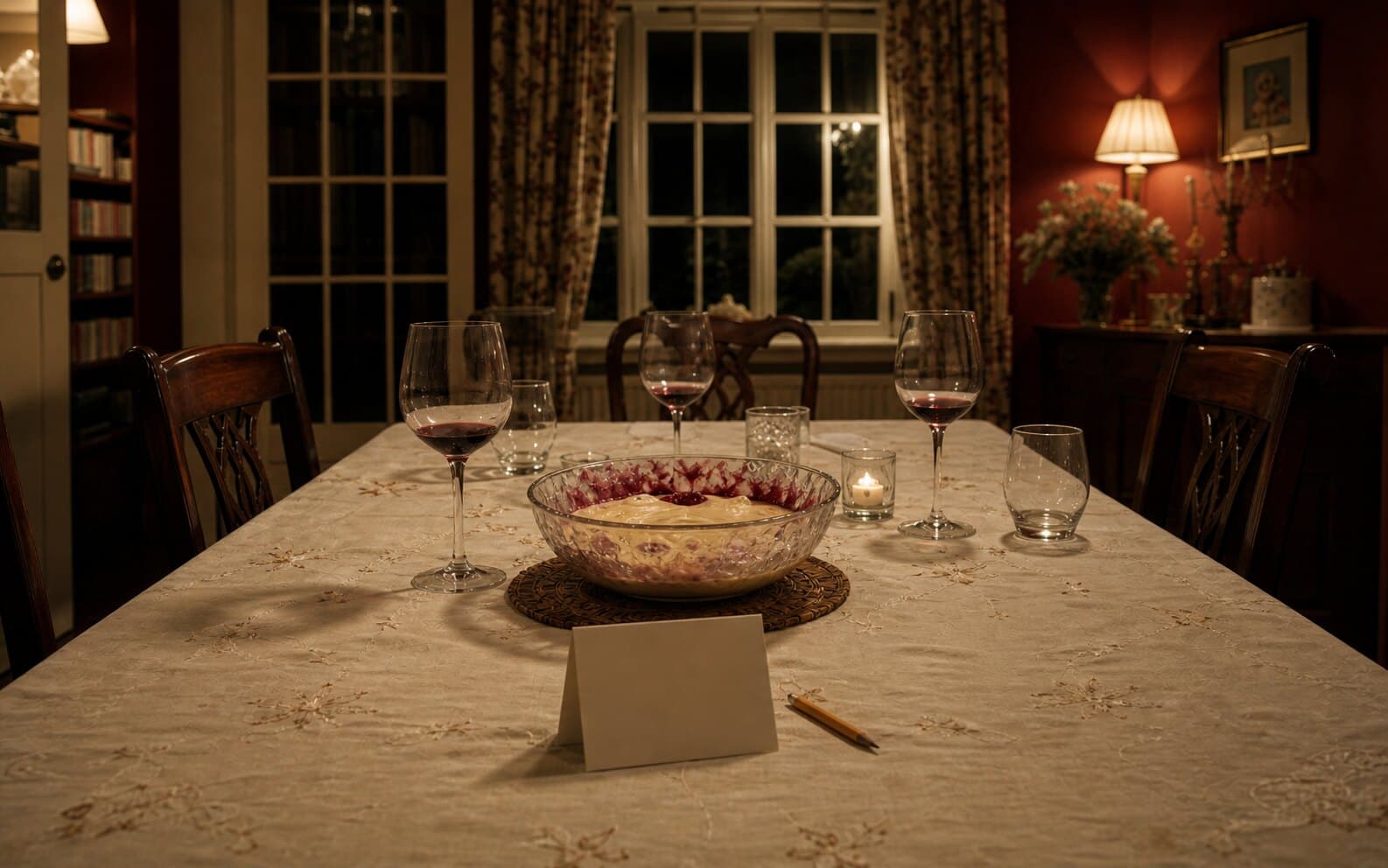
News Intro
A home cook who hosted the third of five evenings in an amateur dinner party competition has lodged a formal objection to the scores recorded by their fellow guests, describing the marks as the product of bias, ingratitude, and a coordinated effort to suppress the standing of a clearly superior host.
Under the arrangement, each participant takes a turn hosting the others at home across consecutive nights, with every guest privately awarding the evening a score out of ten at the end. The marks are pooled, the host with the highest total wins a cash prize, and no host is permitted to see the scores until all of the evenings have concluded.
The host at the centre of the dispute has now seen them.
According to other participants, the evening proceeded broadly as planned. A three-course menu was served. Guests arrived, were shown the home, ate, scored the night, and went home. The host maintains that this summary omits the context, the effort, the provocation, and the obvious motive of everyone involved.
The scores, the host says, do not reflect the meal. They reflect the people.
The Host's Statement
I take entertaining seriously. I always have. So when it was my turn to host, I did not serve something simple to keep people comfortable. I served something ambitious, because the competition rewards ambition, or it is supposed to.
The starter was complex. I will not pretend it was not complex. It was meant to be. One guest described it as "interesting," which I have since learned is what people say when they are intimidated.
The main course took the time it took. If a dish is worth doing, it is worth keeping people waiting for, and I told them as much when I came out of the kitchen to explain the delay for the third time. They said it was fine. They then marked me as though it had not been fine, which tells you everything.
The dessert is where I believe the resentment became organised. It did not set. I am willing to say that openly, because I have nothing to hide. It did not set, I served it anyway, and I described it as a deconstructed version of what it had originally been intended to be. This is a recognised technique. One guest pushed it around the bowl and exchanged a look with another guest. I saw the look. The look is in my objection.
After dinner I gave them a full tour of the house, including the rooms that were not relevant to the dinner, because hospitality is about the whole experience. I believe the tour alone should have secured a strong score. Instead, I was marked by people who, I will remind everyone, I had personally fed.
I have requested that the scores be reviewed, withdrawn, and re-issued by guests acting in good faith. I am told this is not how the competition works. That, in itself, is part of the problem.
Assessment Of The Evening
The recurring feature in disputes of this kind is the host's certainty that effort and quality are the same measurement. They are not. The guests were not scoring how hard the evening was to produce; they were scoring how it felt to sit through. A long wait, repeated explanations from the kitchen, and a dessert served in a state the host themselves concedes was unfinished — these are experiences, and the guests rated the experience they actually had. The host is appealing a verdict on the meal as though it were a verdict on their character, which is precisely why they cannot accept it.
From a straightforward loss-assessment view, the dessert is the whole claim. The host has admitted, on the record, that the product did not set and was served regardless. Once you concede that the goods left the kitchen in a known-defective condition, you cannot then attribute the resulting low marks to malice. The guests are not liable for the outcome of a dish the host knew had failed. The "deconstructed" framing does not transfer the risk back to them. It stays, firmly, with the person who plated it.
What I keep coming back to is the house tour. Nobody enters a dinner party hoping to be shown a spare room. The host has built an entire defence around generosity, yet every example of that generosity is something the guests had to endure rather than enjoy. The extended tour, the third trip out of the kitchen, the lengthy explanation of the deconstruction — these are not hospitality. They are obligations the host imposed and is now itemising as kindnesses.
Other participants maintain that the scoring was neither coordinated nor personal, and note that they were not permitted to compare marks at any point, which would make a conspiracy difficult to arrange even had anyone wished to.
Reader Reaction
u/Unset_Pudding_402 · 28744 points · 6h ago
"It did not set, I served it anyway, and I described it as deconstructed" is the most honest dishonest sentence I have ever read.
u/SawTheLook_91 · 21330 points · 6h ago
He saw a look between two guests and put it in a formal objection. The look is in the objection. I cannot recover from this.
u/Course_Three_Delays_57 · 17905 points · 6h ago
INFO: at which point during the third trip out of the kitchen did you decide the guests were the problem?
u/Reluctant_Tour_Guest_18 · 15662 points · 6h ago
Imagine being walked round a stranger's spare bedroom after a two-hour wait for the main and then being told the tour should have earned them points.
u/Marked_In_Good_Faith_33 · 12048 points · 6h ago
The rules say you cannot see the scores until the end specifically so this exact person cannot do this exact thing, and he found out at the end and did it anyway.
Community Poll
Community Poll
Latest reader breakdown
Were the host's scores awarded fairly?