Local Figure Accused of Using Novelty Millinery to Influence Decisions
Investigators have reopened an inquiry into a man whose extensive collection of elaborate hats is alleged to have influenced the decisions of officials and associates, though officers concede they cannot yet explain how.
News Intro
Detectives have renewed an investigation into a local man whose long-documented enthusiasm for elaborate and unusual headgear is now the subject of formal concern, following fresh allegations that he has used specially made hats to influence the decisions of officials, victims and associates.
The man, a former designer described in earlier files as having a "consuming interest in millinery," first came to attention some years ago in connection with a number of incidents in which people around him were said to have acted against their own interests shortly after being in his company. He was interviewed, released, and interviewed again. He has never accepted that his hats played any part.
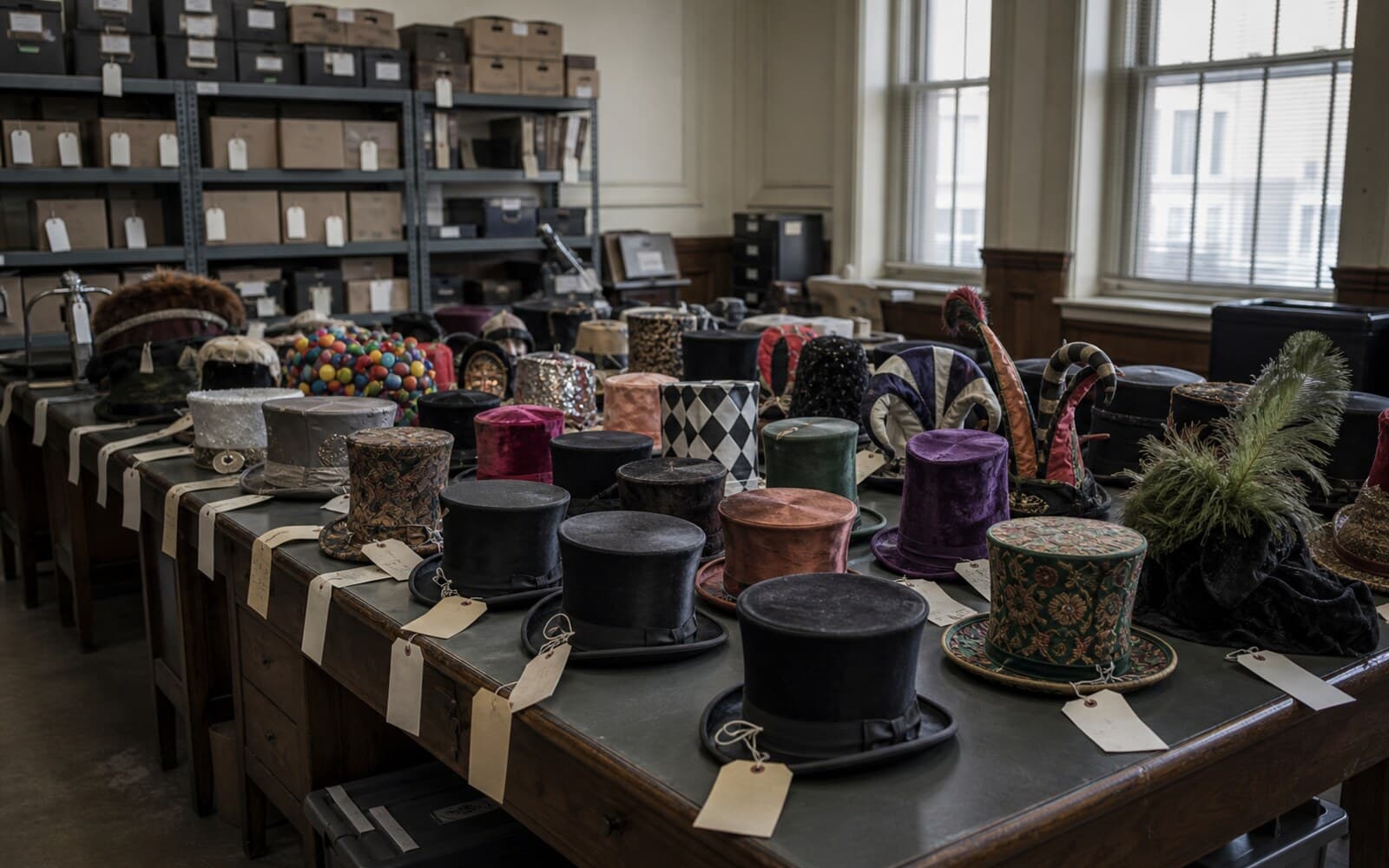
Officers say the renewed inquiry follows a further sequence of events in which several individuals reportedly handed over property, access or cooperation and were later unable to satisfactorily explain why. In each case, witnesses recall the man wearing an item of "distinctive and theatrical" headwear at the time.
Investigators have been careful in their public statements. They confirm they hold "a significant quantity of hats," that these hats are "of interest," and that they remain "concerned about the hats." Beyond this they have declined to elaborate, in part, one officer conceded, because they are not entirely sure what the concern consists of.
The man maintains that he is a private collector, that his interest in hats is a legitimate and harmless passion, and that any influence attributed to him is coincidental. He has described the inquiry as "a persecution of a hobbyist."
"It Is About the Hats. It Is Never About Anything Else"
People need to understand that I make hats. That is the whole of it. I have always made hats, I will always make hats, and I resent the suggestion that a man cannot pursue a decent, exacting craft without a room full of officers watching his hands.
They keep asking me how the hats work. That is not a question you ask a milliner. You ask a milliner about brim, about crown, about the fall of a feather. You do not ask a milliner how the hat "works," as though the hat were doing something. The hat sits on a head. That is its function. It is a magnificent function and I will not have it diminished.
Yes, people change their minds around me. People change their minds all the time. A man will decide to sign a thing, or open a door, or step politely to one side, and afterwards he cannot say why, and somehow this is my doing. I was simply present, wearing, on that occasion, a rather fine piece I had finished only the week before.
They took eighty of them. Eighty. Boxed them, tagged them, wheeled them out on a trolley as though they were dangerous. I asked which one was the problem and they could not tell me. They could not tell me because there is no problem. There is only envy. There has always been envy, ever since I was passed over, ever since they gave the recognition to lesser men in lesser hats.
I am not controlling anyone. I am simply, and I say this without apology, the finest maker of persuasive headwear this district has produced. Those are two entirely separate facts and I would ask that they be kept apart.
The Question of How
The legal difficulty is one of mechanism. To bring a charge of undue influence you must be able to describe the influence and the means by which it was exercised. Here we have a consistent pattern of people acting against their own interests, and a consistent presence at the scene of a man in a remarkable hat. What we do not have is any account of how a hat could produce that result. A court cannot convict on a hat it does not understand.
From a decision-making standpoint the reported pattern is unusual. Individuals describe complying readily, then being unable to reconstruct their own reasoning afterwards. In ordinary workplace disputes people can at least tell you why they agreed to something, even if the reason was poor. The absence of any recalled reasoning, combined with the recurring detail of the headwear, is what I would want examined under proper conditions rather than dismissed.
The investigating team has confirmed that no hat has yet been tested, as no officer has volunteered to wear one.
Perkins on the Filing
Eighty items of headwear, held in secure storage, catalogued and awaiting movement to an examination facility. I would simply note that this is, in essence, a rolling-stock and depot problem. Were the collection managed on proper railway principles, with numbered stock, a maintenance roster and a scheduled transfer between sites, the district would know exactly where each hat was at any given moment. The mystery, such as it is, is fundamentally a logistics failure.
From the Public Gallery
u/Brim_And_Proper_88 · 26740 points · 6h ago
The line "you do not ask a milliner how the hat works" is the single most incriminating thing a man has ever said in his own defence.
u/Signed_It_And_Cant_Say_Why · 21188 points · 6h ago
I was on a jury adjacent to a case like this. We all agreed on the verdict. To this day none of us can tell you what the verdict was.
u/Persuasive_Headwear_Ltd · 13905 points · 6h ago
"Finest maker of persuasive headwear this district has produced" is doing an unbelievable amount of work in that sentence and he said it out loud, to police.
u/EvidenceTrolley_2 · 4102 points · 6h ago
Genuinely the funniest part is they seized eighty hats and still can't point at the one that does it. Lads it might be the hats. All of them. That's allowed.
u/PassedOverForTheAward · 311 points · 6h ago
The grievance about being "passed over" is the tell. This has never once been about hats and yet it is entirely about hats.
Community Poll
Community Poll
Latest reader breakdown
Should the hats be treated as evidence or as a personal interest?
Topics