Local Man Confesses Killing To Mother Then Expresses Regret Over Consequences
A local man has admitted to his mother that he recently killed a man, before immediately raising concerns about how the disclosure might affect his own future.
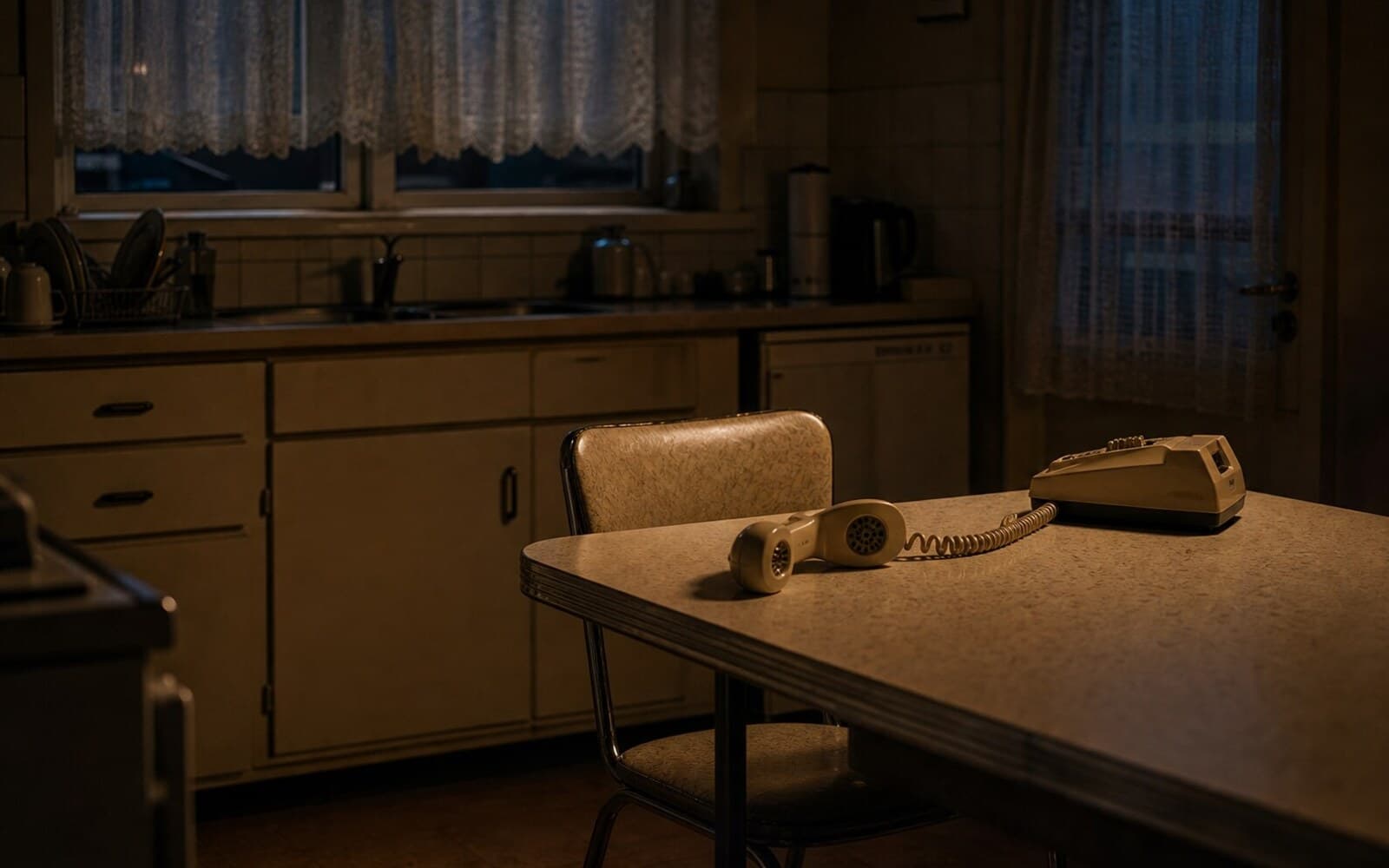
News Intro
A local man has disclosed to his mother that he has recently killed another man, in a late account that combined a clear admission with an extended reflection on how the matter might now affect his own life.
According to the account, the man approached his mother directly and stated that he had just taken a life. He is reported to have described the act plainly, indicating that he had placed a weapon against another man's head, discharged it, and that the man was now dead. He offered no dispute as to what had occurred.
The disclosure did not, however, remain focused on the deceased. The man is understood to have moved quickly from the admission itself to the consequences he now anticipated for himself, stating that his own life had "just begun" and that he had now, in his assessment, "thrown it all away." Observers note that the account devoted considerably more attention to the speaker's future than to the man he had killed.
The man further indicated that his actions had caused his mother distress, and appeared to apologise for the upset rather than for the act. He is reported to have told her not to cry, and to have advised that, should he fail to return by a certain point the following day, she should "carry on as if nothing really matters."
Legal observers have noted that the disclosure raises a number of unresolved questions, chief among them whether an unprompted admission of this kind, delivered to a family member during a period of evident emotional difficulty, carries any formal weight.
The Confessor's Account
I told her the truth and now I cannot stop thinking about myself
People are forming views, so I may as well set out what happened.
I did a thing. I will not soften it. There was a man, and now there is not, and I was the reason for the change. I have never claimed otherwise. I am not the sort of person who hides from a fact.
So I went to my mother and I told her. I felt she deserved to hear it from me. I said it plainly. I have always believed that honesty, delivered to the right person at the right hour, is its own form of decency.
What I did not expect was how much I would then need to talk about myself.
Because the truth is, I had only just got going. My life was, in many respects, just beginning. And now there is this. I find I keep returning to the unfairness of the timing, which I accept is not the central issue, but which I cannot stop raising.
I told her not to cry. I meant it kindly. I said that if I was not back by tomorrow, she should simply continue, as though none of it had ever mattered very much. I thought this was a comfort. On reflection it may have raised more questions than it settled.
I am aware that, throughout, I returned again and again to my own prospects. The chills going down my spine. The aching body. The sense that the time had come to face whatever waited. I would note that these are real feelings and that I was experiencing them sincerely.
I do not think I have done the wrong thing by speaking. I only wonder, now, whether I have said too much to the one person legally least able to help me, and not nearly enough to anyone who could.
Legal Review
The central difficulty is one of standing. An unsolicited admission made to a parent, in the home, in a state of evident distress, is not the same as a statement given under caution. What we have is a disclosure of fact — the man does not contest that a death occurred or that he caused it — wrapped in a great deal of material that is purely emotional. The admission is unusually clear. Everything around it is unusually unhelpful.
Observers note that at no point in the account does the man appear to seek legal advice, despite repeatedly anticipating that consequences are coming.
There is a recognisable pattern here in which the person delivering difficult news rapidly reorients the conversation around their own experience of it. The instruction not to cry, the focus on his own beginning life, the request that she simply carry on — these are framed as reassurance, but they place the emotional labour back onto the listener. The mother is asked to absorb both the news and the speaker's feelings about the news, simultaneously.
From an exposure standpoint, the phrase "if I'm not back this time tomorrow" is the one that concerns me. It indicates the individual anticipates a loss — of liberty, or of life — within a defined window, yet makes no provision for it beyond asking a dependant to continue as though nothing mattered. There is no contingency. No notification of authorities, no representation arranged. The whole disclosure is structured as a goodbye rather than a report, which from a claims perspective leaves a great deal unaddressed.
Reader Reaction
u/Reluctant_Juror_44 · 31884 points · 6h ago
He confessed to a killing and within about two sentences made it about how his own life had only just begun. Incredible focus.
u/Mantelpiece_Witness · 24190 points · 6h ago
INFO: did he tell anyone who could actually do something, or just his mum, at night, while crying
u/Quietly_Concerned_Neighbour · 19551 points · 6h ago
"Carry on as if nothing really matters" is a genuinely unhinged thing to ask of the woman you have just told this to.
u/CautionRequired_07 · 14002 points · 6h ago
The "if I'm not back this time tomorrow" line implies he has a whole plan he didn't mention. Where is he going. Why is there a tomorrow deadline. So many follow-ups.
u/Settled_Out_Of_Court · 8810 points · 6h ago
Said sorry for making her cry, did not appear to say sorry for the actual thing. Priorities.
Community Poll
Community Poll
Latest reader breakdown
How should the confession be treated?
Topics