Prince Returns to Family Firm Following Disputed Succession and Interim Decline
The rightful heir to a family-run territorial enterprise has resumed the top role years after leaving amid a contested handover, returning to find the organisation substantially degraded under his uncle's interim leadership.
News Intro
A long-running family enterprise has confirmed a change at the top after its designated heir returned to reclaim leadership he had vacated years earlier, following a contested succession that the organisation has never fully explained.
The heir, who had been widely expected to assume the top role in the ordinary course of events, left the organisation abruptly as a young man in the immediate aftermath of the death of the previous leader, his father. Colleagues at the time were given to understand that the departure was voluntary and that the heir bore some responsibility for the death. Both of those understandings have since been revised.
In his absence the role passed to the previous leader's brother, an internal candidate who assumed control without a competitive process and presided over what former staff describe as a sustained and avoidable decline.
A handover conducted at speed
The circumstances of the original succession remain the most contested part of the record. According to accounts now emerging, the previous leader died during an incident that the interim successor had personally engineered, having arranged for a large and panicked crowd to move through a confined valley at the moment the leader was attempting a rescue.
The heir, then a child, was present and was persuaded on the spot that he had caused the death himself. He was further advised, by the very individual who had orchestrated events, that the responsible course of action was to leave and never return. He took this advice.
The organisation was informed that both the leader and the heir had been lost in a single unfortunate accident. Control transferred to the brother immediately and without objection, in part because the individuals best placed to object had been retained by him as an informal enforcement function.
Performance under the interim leadership
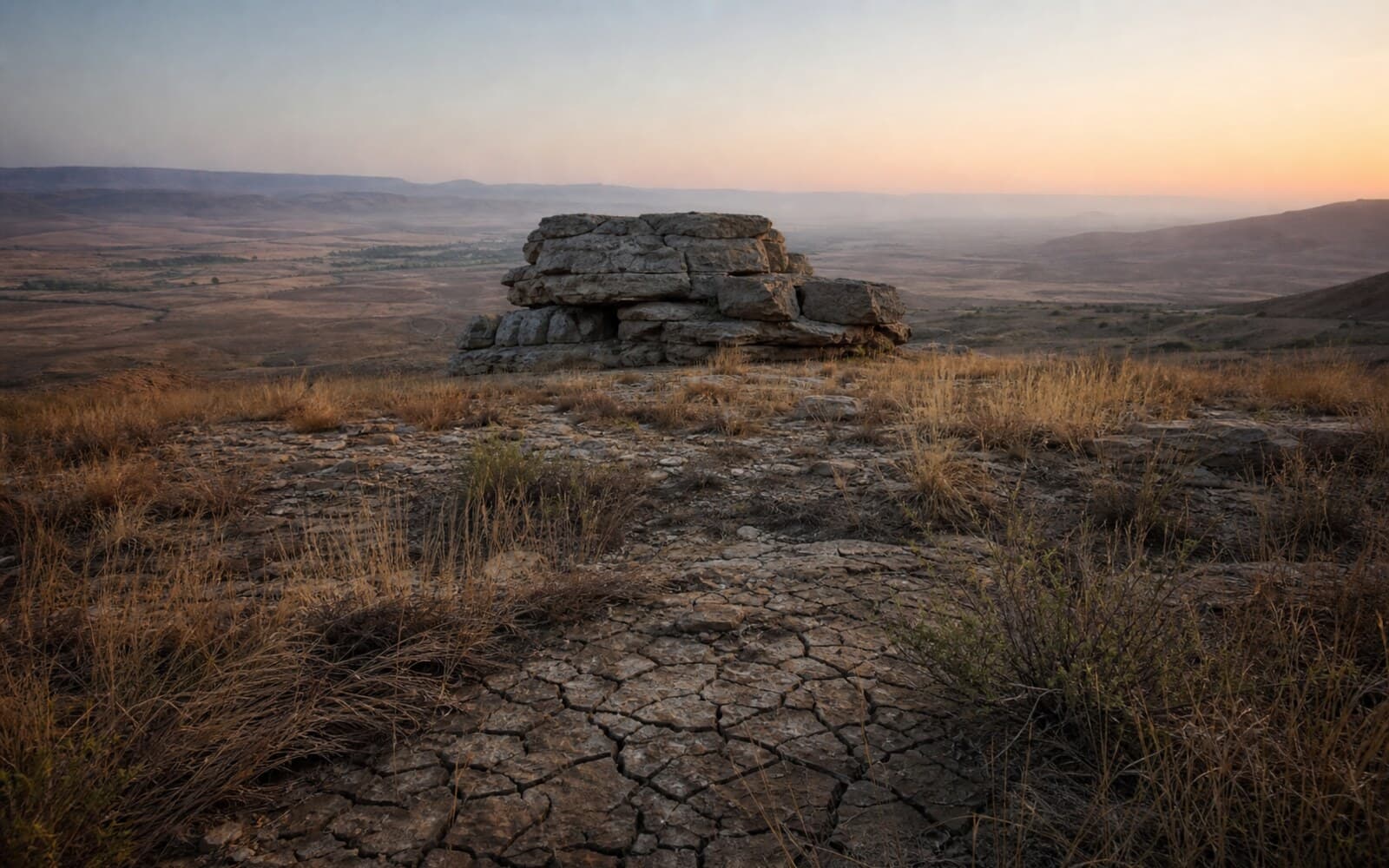
Former colleagues are near-unanimous on the trajectory that followed. The territory the organisation managed, once described as abundant and carefully balanced, entered a prolonged period of resource depletion. Grazing was not rotated. Populations were not managed. The natural cycle on which the whole operation depended was, by multiple accounts, simply allowed to break down.
The interim leader is understood to have delegated day-to-day operational matters almost entirely to the enforcement group he had brought in, who consumed resources faster than the territory could replace them and were not subject to any recognisable performance framework. Attempts by longer-serving staff to raise concerns were, sources say, discouraged.
By the time of the handover back, the site was widely regarded as no longer viable. The interim leader's own position was that conditions were essentially outside his control and that morale problems predated his tenure.
The returning executive's account
Posted to a professional network by someone who was there at the start
A lot of people know the version where I left and have mistaken it for the whole story.
For years I genuinely believed I'd caused the thing that ended my father's career. That's what I was told, at the time, by the person who benefited most from me believing it. So I did what he suggested. I left. I found somewhere warm, with very few responsibilities and a diet I would not describe as ambitious, and I stayed there. I told myself it was a lifestyle choice.
It was not a lifestyle choice. It was avoidance, and I dressed it up as a philosophy so I wouldn't have to look at it.
What brought me back was hearing what had happened to the place. I'd assumed it was running fine without me. It was not running fine. It was, by any measure, being run into the ground by a man who never had a plan beyond acquiring the role and had no idea what to do with it once he had it.
So I returned and took the job I had walked away from. I'm told this makes me a strong leader. I'd gently point out that I am the same person who left, and the main thing that changed is that I finally checked.
Assessing the recovery
This is a textbook interim-leadership failure, and the failure is not that the territory declined. Territories decline. The failure is that there was no succession plan, no oversight of the successor, and no mechanism for anyone to ask whether the person who took over was actually capable of running the thing. The organisation confused availability with competence. He was there, he was related, and he wanted it. None of those are qualifications. The recovery only began because the original heir returned voluntarily, which is not a strategy — that is luck arriving late and being mistaken for planning.
What strikes me is how effectively the departure was engineered. This was not a young man who simply lost his nerve. He was told, by an authority figure, at a moment of acute distress, that he was responsible for a death and that leaving was the decent thing to do. That is a textbook manipulation, and it worked for years. His return is healthy, but I would resist framing it as a triumph of character. He came back the moment he learned the truth. The real question the organisation should be asking is why its entire leadership pipeline could be disabled by one conversation nobody was in the room to check.
Perkins on the wider network
Everyone is focused on the handover, and nobody has looked at connectivity. You have an entire operation built around one confined valley through which the whole population is periodically expected to move at once. That is a single point of failure. The fatal incident, as I understand it, happened precisely because too many individuals were funnelled through one gorge with no alternative route and no signalling of any kind. A properly managed passing loop would have prevented the crush entirely, and none of the subsequent leadership difficulty need have arisen.
The consultant maintained this assessment when advised that the site has no rail provision, no gorge timetable, and no realistic prospect of either.
Reader Reaction
u/Understudy_Uncle_04 · 44192 points · 6h ago
So the interim leader caused the vacancy, filled the vacancy, then blamed the decline on circumstances. That is three separate red flags in one CV.
u/GrasslandBalanceSheet · 31860 points · 6h ago
"I assumed it was running fine without me" is the single most expensive assumption in this entire story.
u/HesitantHeir_88 · 27033 points · 6h ago
Not to defend the guy who walked away, but being told as a child that you killed your own father is a fairly effective retention deterrent.
u/HesitantHeir_88 · 19418 points · 6h ago
Replying to myself: the fact that the enforcement team were kept on and the concerns were quietly discouraged tells you the decline was a management choice, not weather.
u/ReturnPathClear_51 · 15702 points · 6h ago
The recovery plan was "the correct person turns up eventually." Great outcome, terrible governance.
Community Poll
Community Poll
Latest reader breakdown
Who bears responsibility for the organisation's decline?
Update
The reinstated leader has confirmed that the interim successor is no longer with the organisation and that the enforcement group has been dispersed. In a short statement, he said the priority now was restoring the territory to a sustainable footing and, in his words, ensuring that "the cycle is allowed to work as it was supposed to."
He declined to elaborate on the departing successor's exit arrangements, saying only that the matter had been resolved internally and that he did not expect the individual to return.
Topics